Deevnet Infrastructure Platform #
Infrastructure. Automated. Reproducible. Documented.
Deevnet Mobile (mobile) #
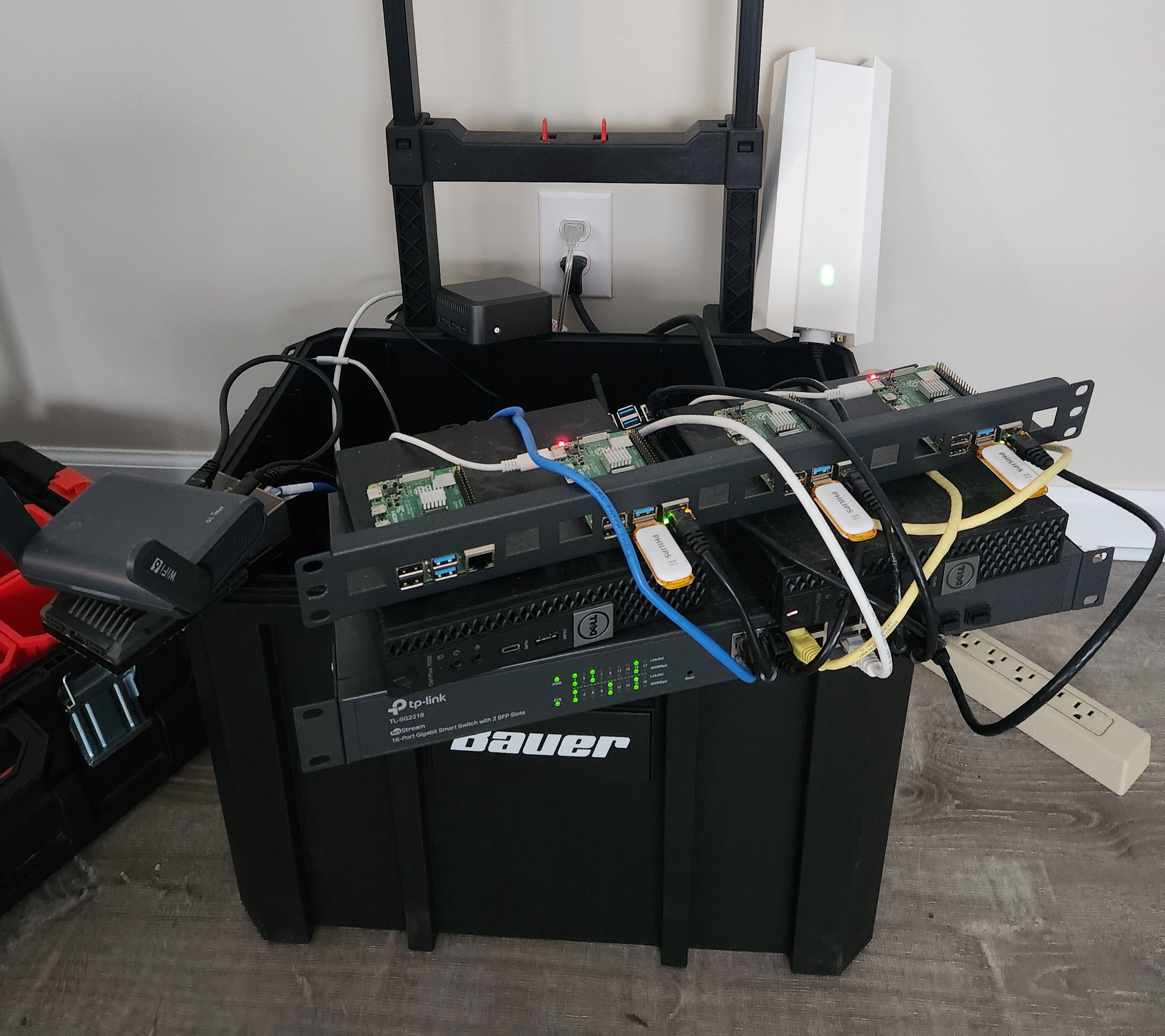
A cloud you can carry. Set it up on-premise, anywhere, and get:
- Portable network addressing. Its address space and DNS zone travel with the case: the same addresses and names on the road or docked at home, with no renumbering.
- IoT as a Service. Per-device Wi-Fi keys, scoped MQTT accounts and a device registry, all from Terraform. (in development)
- Self-service tenants. Isolated networks, DNS zones and state storage, from the tenant’s own code.
- Works offline. Builds and rebuilds itself from code, with no internet needed.
- A bench for its devices. Prototype embedded hardware right beside the platform.
In the case: router, switch, wireless AP, Proxmox hypervisors, Raspberry Pis, and breadboards and components.
Deevnet Home (home) #
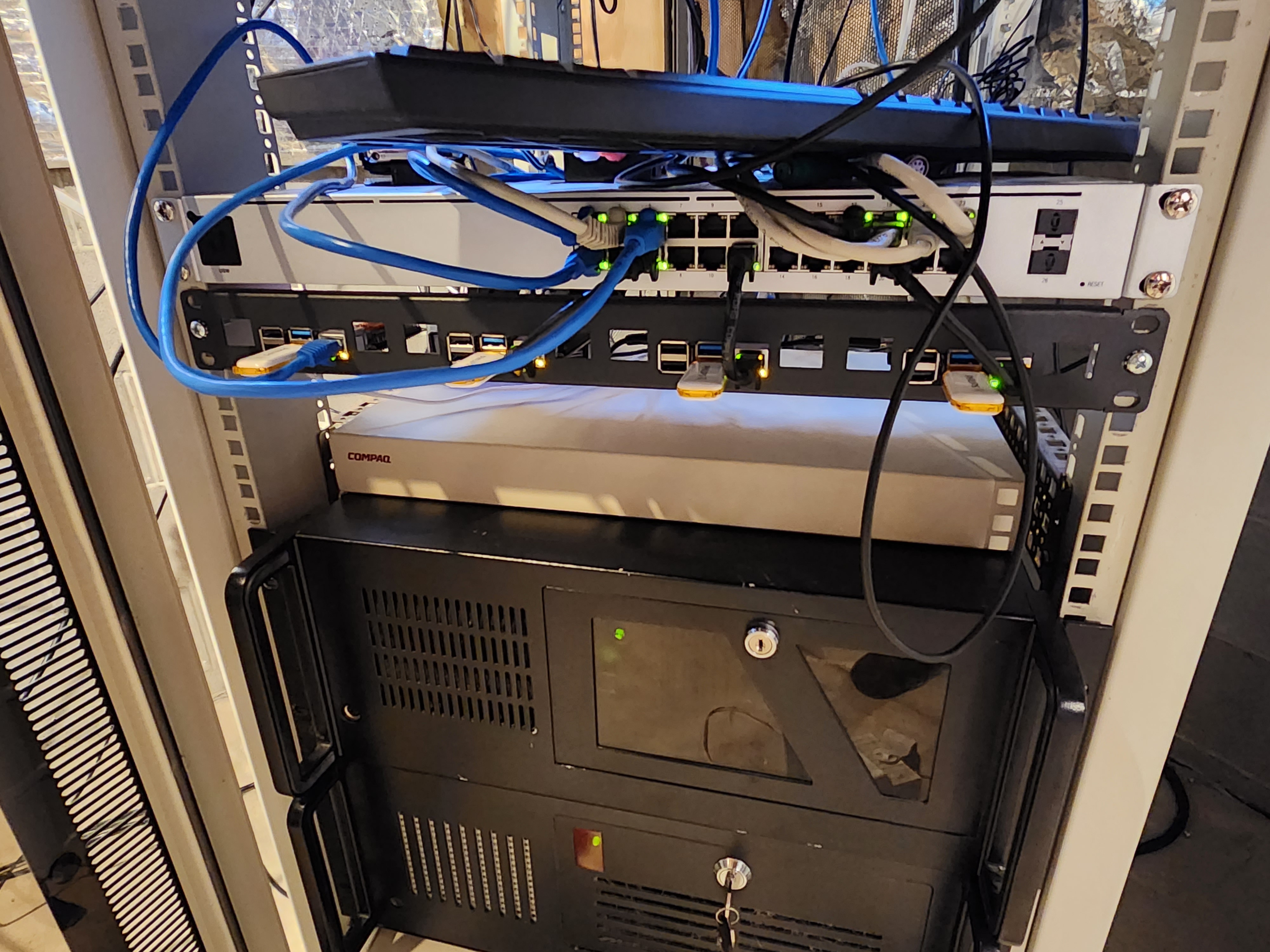
A home infrastructure deployment supporting various functions:
Permanent compute and storage
Home automation and IoT backends
Development and CI/CD environments
Media and personal services
Explore the Documentation #
Architecture
Sites, substrates, tenants, and system-level design intent.
Standards
Non-negotiable rules for naming, correctness, and identity.
Implementation & Tooling
Hardware and software platform decisions with rationale.
Operational Runbook
Step-by-step procedures for operating and maintaining infrastructure.
Change Records
Significant changes, one dated record each — goal, procedure, undo, outcome.
Incident Records
What broke, how it was found, why, and what was done so it does not happen again.
Roadmap
Forward-looking project plans and progress tracking.
Code Repositories
GitHub repos, layout, and getting started guides.
Adaptability #
While this project targets specific hardware, the patterns, automation, and documentation are designed to be adaptable to any infrastructure. The standards and architecture defined here can be applied to your own collection of devices and networks.
Documentation Philosophy #
This documentation exists to:
- seed context to AI agent tooling,
- make intent explicit,
- prevent knowledge from living only in someone’s head,
- and ensure future changes remain coherent.
If something “works” but violates these documents, it is considered incorrect.