Bootstrap Node #
Purpose #
The bootstrap node is the management plane for standing up a Deevnet site. It’s a single, portable device that contains everything needed to provision and configure an entire environment from scratch.
Goals:
- Self-contained — All automation, artifacts, and services on one device
- Portable — Move between sites (mobile, home) as needed
- Independent — Can operate independently of the site network
- Air-gapped capable — Can provision without upstream internet once artifacts are staged
- Disposable authority — Hands off control to Core Router once the site is running
“Bring one box, provision everything.”
Hardware Platforms #
Site: mobile (mobile)
The mobile site uses a portable developer workstation (laptop) as its bootstrap node. Dual-NIC capability is achieved via built-in Ethernet or USB adapter.
Hardware #
| Attribute | Value |
|---|---|
| Type | Developer workstation (laptop) |
| NICs | Dual-NIC (built-in + USB adapter) |
| Storage | 500GB+ |
| RAM | 16GB+ |
| CPU | Modern x86_64 |
Selection Rationale #
- Portability: Already carried for development work
- Dual-NIC capable: Upstream + substrate connectivity
- Sufficient resources: Meets bootstrap node requirements
- Dual-purpose: Serves as both workstation and bootstrap node
Site: home (home)
The AOOSTAR N1 PRO is a compact mini PC used as the dedicated bootstrap node for the home site. Its dual 2.5GbE NICs provide the upstream + substrate connectivity required for the bootstrap role.
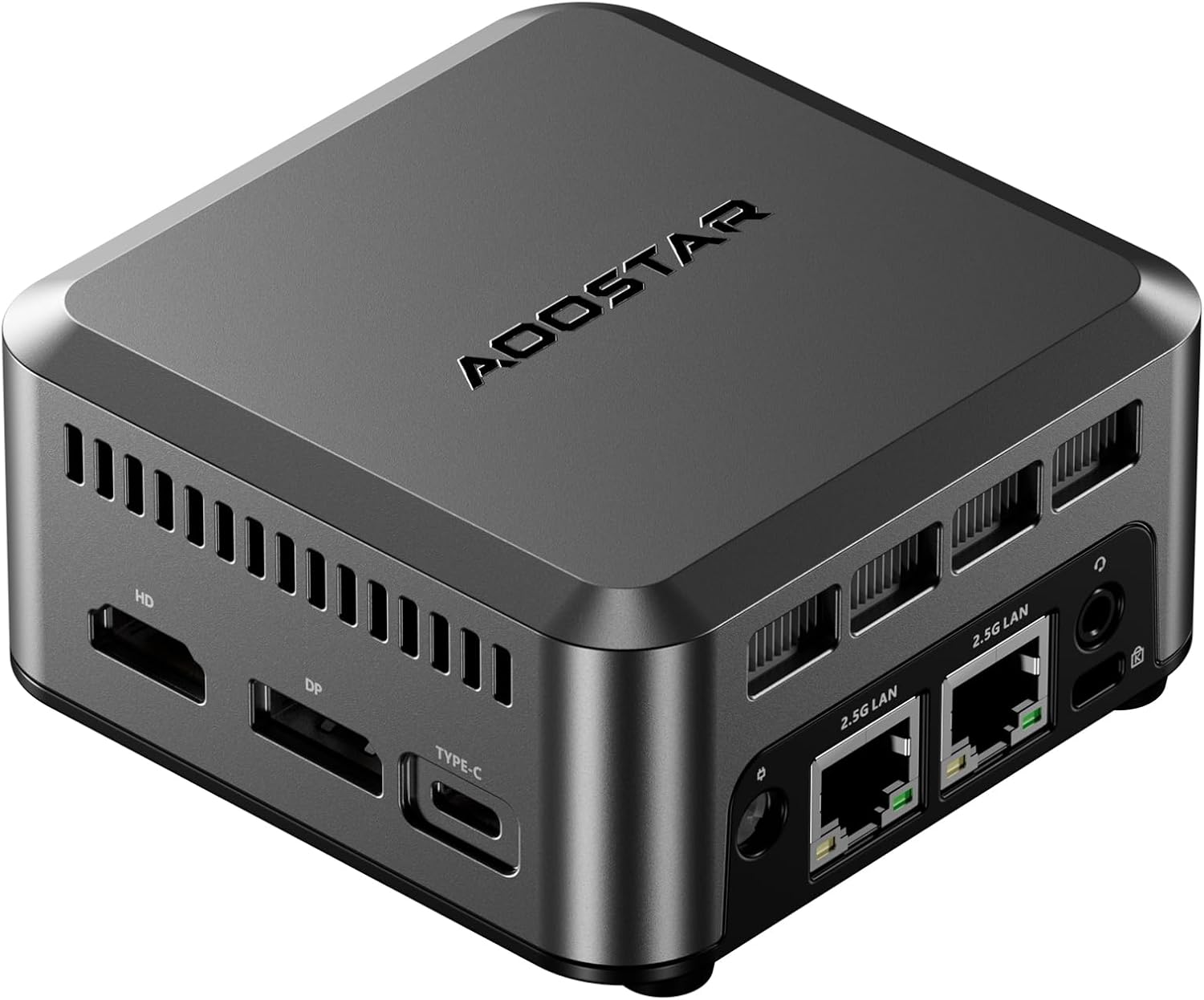
Hardware #
| Attribute | Value |
|---|---|
| Model | AOOSTAR N1 PRO |
| CPU | Intel N150 (upgraded N100 variant) |
| Memory | 12GB LPDDR5 |
| Storage | 1TB NVMe SSD |
| Ethernet | 2x 2.5GbE (Intel i226-V) |
| Form factor | Mini PC |
| Cooling | Active (fan) |
Selection Rationale #
- Dual 2.5GbE NICs for upstream + substrate connectivity (bootstrap requirement)
- Compact form factor for dedicated always-on bootstrap role
- 12GB RAM sufficient for artifact serving and Ansible execution
- 1TB storage for ISOs, images, and boot artifacts
- Intel i226-V NICs for reliable network performance
Operating System #
Both bootstrap nodes run Fedora Workstation, configured via the deevnet.builder Ansible collection.
| Attribute | Value |
|---|---|
| OS | Fedora Workstation |
| Version | Fedora 43+ |
| Collection | deevnet.builder applied |
The bootstrap node is provisioned via PXE from another bootstrap node, or manually installed and then configured via Ansible self-application.
Network Position #
graph LR
    A[Host Network
WAN/upstream] <--> B[Bootstrap Node
dual-homed] <--> C[Site Network
mobile/home]
- Upstream interface: Connects to existing network (home, hotel, office) for internet access
- Downstream interface: Becomes the gateway for the site during bootstrap
During initial provisioning, the bootstrap node may NAT traffic for substrate hosts. Once Core Router is configured, routing authority transitions. This handoff is explicit, not automatic.
Roles #
The bootstrap node is configured using these deevnet.builder roles:
| Role | Purpose |
|---|---|
| Workstation | Developer tools, users, Ansible controller |
| Artifacts | Air-gapped artifact serving (ISOs, packages, images) |
| PXE | Network boot infrastructure (TFTP, GRUB configs) |
| Network Controller | Switch and AP management (Omada/UniFi) |
Service Identity #
Per the Naming Standard:
bootstrap.mobile.deevnet.net— The bootstrap node itselfartifacts.mobile.deevnet.net→bootstrap.mobile.deevnet.net(CNAME)pxe.mobile.deevnet.net→bootstrap.mobile.deevnet.net(CNAME)
Per Multihoming, the bootstrap node hosts multiple services. This co-location is intentional and documented—blast radius is understood.
Git Repository Layout #
All Deevnet repositories are checked out to a standard location:
~/home/
├── ansible-collection-deevnet.builder/   # Provisioning roles
├── ansible-collection-deevnet.mgmt/      # Management plane and centralized services
├── ansible-collection-deevnet.net/       # Network device configuration
├── ansible-inventory-deevnet/            # Host inventory (home, mobile)
├── deevnet-image-factory/                # Packer image builds
├── deevnet-tenant-fabric/                # Tenant EVPN fabric (hypervisor readiness)
├── deevnet-tenant-tdemo/                 # The demo tenant
└── deevnet-docs/                         # This documentation (submodule)
The inventory is site-specific. Running playbooks from the bootstrap node targets the connected site.